
We hear a great deal about tolerance today. For some, tolerance means approving of and allowing anything anyone else chooses to do, whether or not it is moral or wise. However, Christians know there is a better definition of tolerance.
Tolerance is a form of love—patient love. It implies being considerate of others, including their feelings and behavior, while not necessarily approving of them. You recognize their rights. You allow them their beliefs without action against them. You become free of bigotry. Tolerance is to be admired as righteous behavior. The poet says, “First we abhor, then we tolerate, and then we embrace.” Of this we need to be careful when it comes to our values and principles. The world and its morals seduce us. Tolerance for others is imperative so long as it does not violate the law or affect the well-being of society, especially the family. To tolerate drugs, illicit sex, and all manner of pernicious behavior that affects society negatively would make one party to the problem. We are to stand for truth and virtue. Tolerance is not permissiveness and apathy. Tolerance understands (Ed J. Pinegar and Richard J. Allen, excerpted from a forthcoming book called, “What We Need to Know and Do).
In this family night lesson, you’ll help your children to live in a diverse society without losing their values or abandoning God’s call for righteous societies.
Learn how to have a family night.
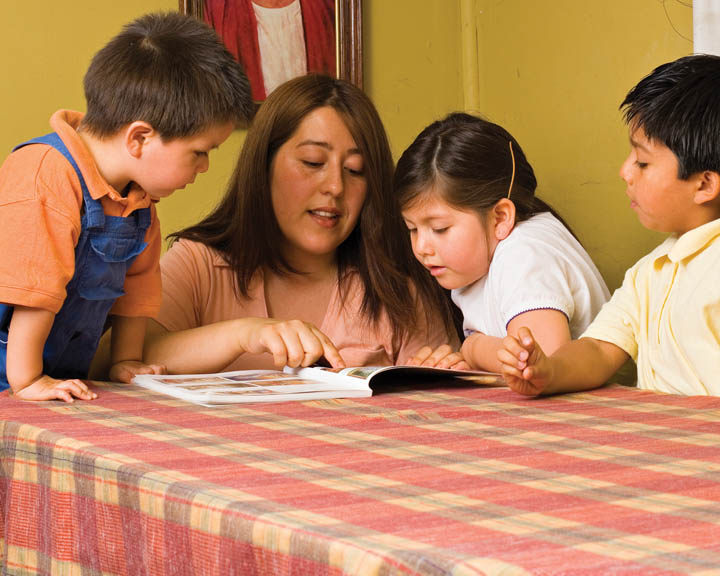 Ask your children how they’d like it if your family decided to do away with all rules and standards, so that everyone in the family could do anything they wanted. There is a good chance they will initially like this idea. Help them to see this would be a disaster, even though it initially sounds appealing. Offer some scenarios based on the ages of your children and let them decide if they would like living under those conditions.
- Since there are no rules, there is no private property. Therefore, everyone in the family can go into your room and take your belongings, read your diary, break your favorite possessions, and even redecorate your room if they’d like.
- Since there are no rules, no one has to do chores unless they want to. This means it is likely your mother will not go shopping or fix meals. No housework will get done Your father will probably not go to work, so there won’t be any money to pay allowances, or even to pay for food, clothing, and housing.
- Since there are no rules, no one will ask you where you are going or when you’ll return. If you are kidnapped, no one will look for you and try to rescue you, because we’ll assume you went on vacation.
Your children will probably decide quickly a few rules are a good idea. Tell them that just as a family needs rules, a society also needs them. However, it is tricky to balance the needs and desires of people who have very different ideas about how things ought to work in our country.
Ask: How do we decide what the rules are for our country? Why are rules necessary? What would happen if we had none? How are rules chosen in your family? Why is the system different for families than for countries?
Tell them it is important in a country where people are very different to have respect for the opinions and lifestyles of others, but that we must balance that respect with protection for important principles. Show a poster with some laws in your area and country, and ask your children to decide which laws are essential and which ones are just based on the preferences of the voters. Examples: Murder is illegal. Grass cannot be longer than three inches. Children must be educated. People can’t park on their lawns.
Explain: Some laws could be changed and it would not harm our way of life or offend God. Other laws must be preserved to protect our nation. Tell your children that today you will be discussing two principles and trying to understand how to do both and how to balance them. Explain this is a difficult concept even for adults, and you’ll need them to be very mature and thoughtful as you discuss it.
Write the words tolerance and righteousness on two cards and place them on a board or wall. Ask the children if they know what the words mean. For older children, offer the quote used at the start of this article. For younger children, explain that tolerance means to accept that everyone is different and has the right to different opinions. Righteousness means to do what God teaches us.
Remove the words and place a large paper heart on the board. Put the word cards back, but inside the heart. Explain that the key to balancing tolerance with righteousness is love. Ask your family if they can find some scriptures that show God expects us to love each other.
Explain: Parents love their children. They know their children may not be just like them. Ask your children to list ways each of them is like and unlike their parents. You may want to invite them to write these down. Parents value the similarities and the differences as long as the differences do not break any commandments. For instance, a parent may love classical music, but a child might prefer country music.
On the other hand, the fact that a parent recognizes a child’s right to have differences of opinions does not mean he has
a responsibility to allow the child to act on every difference. He will most likely allow the child to listen to country music, because if it’s morally clean music, that difference is value-neutral. On the other hand, if a teenager believes using drugs is good, the parent cannot allow the child to use drugs. He still loves his child, but he cannot allow him to do everything he wants to do while the child is under his direction. Why won’t a parent allow a child to use drugs?
A society must act the same way. We must love others who disagree with us. A democracy allows people to have different opinions and to vote to decide which opinion will become law. Sometimes they choose not to make a law concerning a subject. However, there are some things so important a country must not allow its people to have freedom to do whatever they want in those areas. Murder is one area which is too important. Laws protecting families are equally important. It is not intolerant to take a moral or even a legal stand where these types of things are concerned. Of course, tolerance is not just about laws. It is also about how we treat people in our everyday lives.
Turn the remainder of the lesson to the subject of loving and valuing those who are different than we are.
For Families with young children:
Teach your children these two songs about loving those who are different:
I’ll Walk With You: This song focuses on loving those with disabilities and uses Jesus as an example. Ask children to choose stories from their Bible storybook to show how Jesus treated others with love and respect, even when they didn’t live the way He wanted them to live.
This page from a children’s magazine has a coloring page of people of many different nationalities. Scroll down to the heading “Children of God.” If you are not Mormon, simply remove the quote below the picture if you’d like. The picture itself is not religious at all.
We are Different is a children’s song celebrating our friendships with those who are different from us.
Use the remainder of the evening to learn about people in another culture. Read a book or watch a video and then play games or make foods from that nation.
For older children and teens:
Read Changing Places with your teenagers. The top section of the article is appropriate, regardless of your own faith. It is written by a Mormon teenager who grew up in a town where nearly everyone was Mormon. He spent a year in Catholic Ireland, and learned to respect the differences of others without sacrificing his own beliefs. The bottom section of the article, labeled Acceptance, is intended for Mormons. You can hand out the article without the bottom section and your teens will still have the full story. Apply the story to your own religion. Ask your teens to imagine themselves living where no one shares their beliefs. How could they show love and acceptance for those beliefs without sacrificing their own beliefs?
Take some time to learn about the beliefs of a few other religions, using sources that treat those religions with respect. Ask them to look for similarities in the religions. Noticing similarities can help us to respect others. Remind them to treat other religions, cultures, and belief systems the same way they want their own treated. Help them practice standing up for their own beliefs while respecting the rights of others to believe otherwise.